SOC 2 compliance software: how to choose the right platform for audit readiness
Learn how SOC 2 compliance software helps you organize controls, automate evidence collection, monitor compliance, and achieve long-term security maturity.
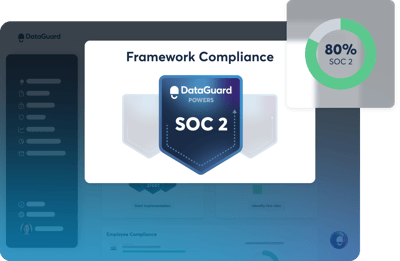
Learn how SOC 2 compliance software helps you organize controls, automate evidence collection, monitor compliance, and achieve long-term security maturity.
SOC 2 reports can be a make-or-break moment for growing SaaS companies. Enterprise buyers want fast, credible proof that you protect their data. Auditors want clear, consistent evidence. And your internal teams want a process that doesn’t hijack the quarter.
That’s where SOC 2 compliance software comes in. The right platform helps you define controls, collect evidence, monitor drift, and stay ready, without living in spreadsheets or chasing screenshots.
This guide explains what SOC 2 compliance software is, what problems it solves, which features matter most, and how to evaluate tools for long-term security maturity.
SOC 2 compliance software is a category of tools designed to help organizations prepare for, complete, and maintain SOC 2 compliance. It supports both first-time readiness work (often tied to a Type I report) an ongoing evidence collection and monitoring (required for a Type II report).
While every platform differs, the strongest tools share a common goal: reduce the manual work of running a SOC 2 program while increasing confidence in audit readiness.
SOC 2 compliance software is best understood as a digital platform that helps organizations prepare for and maintain SOC 2 compliance. They do this by structuring the work around controls, evidence, and accountability.
In practice, it typically:
SOC 2 work often starts with good intentions, but ends with chaotic evidence collection because of factors like:
If your security posture causes unmanageable stress during audit season, you’re likely overdue for automation.
SOC 2 compliance software addresses the real bottlenecks that slow down audit preparation: disorganized documentation, inconsistent evidence, unclear ownership, and last-minute scrambles.
Done well, it also improves broader governance, because SOC 2 controls overlap heavily with the processes mature security teams already want. For example, consider access control, change management, incident response, vendor oversight, and risk management.
Manual SOC 2 preparation fails for predictable reasons, especially when responsibility is spread across engineering, IT, HR, and operations.
Common breakdowns include:
The more the process depends on memory and ad-hoc effort, the more fragile your SOC 2 program becomes.
If you’re a growing SaaS company and you try to “just do SOC 2” without automation, the consequences tend to show up in timelines and cost.
Key risks include:
SOC 2 Type II is where manual processes typically collapse, because they can’t consistently meet expectations.
Rather than operating as a document repository, SOC 2 compliance software should support the full lifecycle: scoping, control design, evidence collection, monitoring, risk and vendor workflows, and reporting.
Below are key questions that matter when evaluating a tool.
SOC 2 is built around the Trust Services Criteria (TSC), which most commonly includes Security, and may also include Availability, Confidentiality, Processing Integrity, and Privacy.
Strong SOC 2 compliance software should provide:
This matters because the SOC 2 framework isn’t a one-size-fits-all list of controls. What you implement must match your systems, your commitments, and your actual operations.
Evidence collection is the biggest time sink in pursuing a SOC 2 certification, and automation can make a sizable difference.
Look for:
Automation should reduce repetitive work while improving audit quality, because evidence becomes consistent and easier to verify.
Policies and procedures are foundational to SOC 2, but it’s easy to forget the value of maintaining them.
To that end, SOC 2 compliance software should support:
Without this, you risk “policy theater”; in other words, documents that exist only for the audit, not for the business.
SOC 2 doesn’t require a specific risk framework, but auditors will look for risk awareness and risk-based decision-making.
A strong platform helps you operationalize risk through:
This is where SOC 2 can go beyond simple compliance and become a repeatable governance system.
Third-party risk is a major component of security assurance. Even if SOC 2 doesn’t prescribe one “vendor program,” auditors and customers will expect you to know your vendors and manage their risk.
SOC 2 compliance software can help by providing:
If you can’t quickly answer “Which vendors process customer data?”, your SOC 2 prep will suffer, as will your security posture.
When it comes to who you should share the details with, SOC 2 work has two audiences: internal leadership and external auditors/customers.
Reporting should include:
A good reporting layer makes audit conversations easier and prevents surprises.
The bigger goal of SOC 2 compliance software isn’t just to make steps more efficient, but to improve audit outcomes: fewer delays, fewer findings, and a more reliable path to Type II.
Audit timelines shrink when evidence is organized before the auditor asks for it.
SOC 2 compliance software can shorten timelines by enabling:
When the auditor sees a structured program, they spend less time clarifying basics and more time validating what matters.
Findings often come from a lack of consistency and almost never malice. Teams intend to do the right thing, but the process isn’t monitored.
SOC 2 compliance software reduces findings through:
SOC 2 Type I and Type II require different “proof.”
SOC 2 compliance software supports Type II readiness by enabling long-term monitoring, recurring evidence capture, and audit trails that demonstrate consistency.
If you’re planning a Type II report, choose software that treats “ongoing” as the default and not as an add-on.
Choosing SOC 2 compliance software is less about flashy features and more about organizational fit. It should match your maturity level, your systems, your audit timeline, and your ability to operationalize the tool across teams.
Before you evaluate vendors, define your internal baseline. At minimum, clarify:
You’ll choose faster and avoid expensive rework when you start with a clear view of expectations and core requirements.
SOC 2 compliance software will store sensitive governance data: evidence, audit notes, security configurations, and potentially employee-related materials. Evaluate the platform as you would any security-critical SaaS.
Key areas to evaluate:
If the tool becomes a “system of record” for your compliance program, it must meet your security bar.
Auditor compatibility matters more than many teams expect. Even a strong internal program can slow down if exports are messy or mappings are confusing.
Look for:
Your auditor doesn’t need to love the tool, but they should be able to work with it efficiently.
Software helps you run the program. Expertise helps you design it correctly. Depending on your maturity, expert support can be valuable for:
The best outcomes usually come from a balance: automation for repeatable work, and expert judgment for nuanced decisions.
Many companies compare SOC 2 compliance software to consultants as if it’s one or the other. In reality, they solve different problems and work best when combined.
Consultants are often most impactful when you need to establish a baseline quickly or solve complex interpretation issues. They can be necessary for:
A good consultant can help you avoid building a SOC 2 program that looks fine on paper but fails during testing.
SOC 2 compliance software provides ongoing value through:
Even if you lean on consultants, software often becomes the backbone that keeps the program alive long after the engagement ends.
| Category | SOC 2 compliance software | SOC 2 consultants |
| Best for | Repeatable workflows, evidence collection, and continuous compliance | Expertise, interpretation, and accelerated readiness |
| Strength | Automation, structure, audit trails | Judgment, experience, tailored guidance |
| Weakness | Can’t replace strategic decisions or nuanced control design | Can be expensive and harder to scale long term |
| Time impact | Reduces ongoing workload and audit-season stress | Can shorten initial readiness if you’re starting from scratch |
| Cost profile | Subscription; predictable budgeting | Project-based; can grow with scope creep |
| Long-term fit | Strong for Type II and continuous operations | Useful for milestones, complex environments, troubleshooting |
You don't have to choose. Benefit from both approaches with DataGuard, where both experts and tech enable your SOC 2 certification.
Pricing varies widely based on company size, scope, integrations, and support level. While exact costs differ by vendor, understanding common pricing models helps you evaluate value.
SOC 2 compliance software pricing is typically based on one or more of the following:
When comparing vendors, look beyond the sticker price and evaluate what’s included: integrations, evidence automation, reporting depth, and support.
ROI is often driven by time saved and risk reduced, but it can also show up in revenue acceleration.
Common SOC 2 software ROI drivers include:
If a tool only helps you “get through the audit,” it may not deliver long-term ROI.
SOC 2 compliance software can fail. And not because the product is bad, but because implementation turns into a rushed checklist exercise.
Common mistakes to watch out for:
Successful implementation often comes down to one thing: making SOC 2 part of normal operations, not a separate side project.
SOC 2 rarely exists in isolation. Many companies also pursue ISO 27001, face GDPR requirements, or need to respond to customer questionnaires that reference multiple frameworks.
SOC 2 compliance software delivers more value when it supports multi-framework governance.
Many SOC 2 controls overlap with ISO 27001 requirements, especially around access control, risk management, incident response, and supplier relationships.
Look for:
This reduces duplicated work and helps you build one coherent security management system.
SOC 2 is not a privacy law, but operational maturity helps GDPR compliance significantly, especially in security, incident handling, and vendor management.
SOC 2 compliance software can support GDPR through:
It won’t replace legal interpretation, but it can strengthen operational readiness.
Multi-framework support matters because your compliance workload multiplies quickly when you’re tackling several compliance objectives at once.
A platform that supports multiple frameworks can:
If your roadmap includes SOC 2 today and ISO 27001 tomorrow, choosing software with multi-framework capability can prevent a painful tool switch later.
Mature SOC 2 automation should feel like you’re running a scalable security program with clear ownership and real-time visibility.
It typically includes:
At that point, SOC 2 stops being a stressful milestone and becomes an operating system for trust.
With the right SOC 2 compliance software and the right operating rhythm, teams move from reactive audit prep to continuous compliance maturity. Manual tracking transforms into structured governance, and the organization benefits as a whole across areas like winning more business, building resilience against threats, and fulfilling legal obligations without additional strain.
Ultimately, SOC 2 is about trust. If you build your program for consistency—not just completion—you’ll be ready for audits, customer reviews, and growth that doesn’t outpace your security foundation.
No. SOC 2 compliance software is not required by the SOC 2 framework. But many organizations adopt it because manual processes become slow, error-prone, and difficult to sustain, especially for Type II audits.
Yes. In fact, startups often benefit the most because they can build clean processes early, assign ownership, and avoid messy retroactive evidence collection later.
Implementation time depends on your security maturity and integrations. Some teams can configure a basic setup in weeks, while full Type II-ready implementation often takes longer due to process changes and evidence cadence.
It can be, but it depends on the vendor. Evaluate encryption, access controls (SSO/MFA/RBAC), audit logs, data residency options, and the vendor’s own security assurances.
Many platforms support multi-entity or multi-workspace setups, which is important for groups, subsidiaries, or companies with separate product lines. Confirm how the tool handles scoping, evidence separation, and reporting across entities.
_HighPerformer_HighPerformer.svg)


TISAX® is a registered trademark of the ENX Association. DataGuard is not affiliated with the ENX Association. We provide Software-as-a-Service and support for the assessment on TISAX® only. The ENX Association does not take any responsibility for any content shown on DataGuard's website.
All data provided is for information only, based on internal estimates. This information is not indicative of KPIs, and is not given with any warranties or guarantees, expressly stated or implied in relation to accuracy and reliability.
{
  "@context": "https://schema.org",
  "@graph": [
    {
      "@type": "Organization",
      "@id": "www.dataguard.com#organization",
      "name": "DataGuard",
      "legalName": "DataCo GmbH",
      "description": "DataGuard, the European leader in security and compliance software, is trusted by more than 4,000 organizations across 50+ countries. We help you identify and manage your security and compliance risks and fast-track your certifications and compliance by combining expert consultancy with AI-powered automation. Our purpose-built, all-in-one platform is developed with the experience of over 1.5 million total hours by a team of certified security and compliance experts.",
      "foundingDate": "2018",
      "taxID": "DE315880213",
      "logo": "https://7759810.fs1.hubspotusercontent-na1.net/hubfs/7759810/DataGuardLogo.svg",
      "url": "www.dataguard.com",
      "email": "info@dataguard.de",
      "telephone": "+49 89 452459 900",
      "address": {
        "@type": "PostalAddress",
        "streetAddress": "Sandstrasse 33",
        "addressLocality": "Munich",
        "addressRegion": "Bavaria",
        "postalCode": "80335",
        "addressCountry": "Germany"
      },
      "sameAs": [
        "https://www.linkedin.com/company/dataguard1/",
        "https://www.youtube.com/channel/UCEQzPZ6sCBCj9cAoBvaLL6w",
        "https://x.com/i/flow/login?redirect_after_login=%2FDataGuard_dg"
      ]
    }
  ]
}
✅ Organization schema markup for "DataGuard" has been injected into the document head.