SOC 2 certification: what it really means and how to achieve it
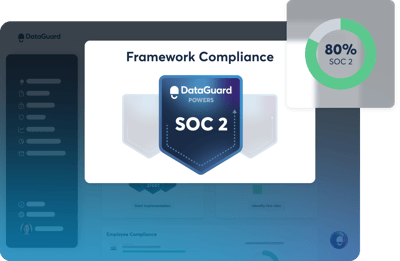
If you’re preparing for your first SOC 2 audit—or trying to understand what a prospect is asking for—this guide is meant to give you clarity and a realistic path forward.
If you’re preparing for your first SOC 2 audit—or trying to understand what a prospect is asking for—this guide is meant to give you clarity and a realistic path forward.
SOC 2 certification is one of the most common “must-haves” in modern B2B sales—especially if you sell software or handle customer data. But the phrase itself is misleading. There’s no official SOC 2 “certificate.” What you actually receive is an independent audit report issued by a licensed CPA firm, based on criteria published by the American Institute of CPAs (AICPA).
In this guide, we’ll break down what people mean when they say “SOC 2 certification,” who typically needs it, what the Trust Services Criteria cover (and how to choose the right scope), and what the real timeline and cost look like in practice.
SOC 2 (System and Organization Controls 2) is an assurance report designed for service organizations that store, process, or transmit customer data. A SOC 2 audit results in a report on controls relevant to one or more Trust Services Criteria: security, availability, processing integrity, confidentiality, and privacy.
In practice, SOC 2 is an independent audit report, not a regulator-issued certification. A licensed CPA firm evaluates your system and controls against the AICPA Trust Services Criteria and issues a SOC 2 report with the auditor’s opinion.
When companies say they are “SOC 2 certified,” they typically mean they’ve successfully completed a SOC 2 audit and can share a SOC 2 report (usually under NDA) with customers.
Even though the output is a report, “SOC 2 certification” has become common industry shorthand. You’ll see it in security questionnaires, procurement portals, and deal requirements because it’s an easy way to express a simple outcome: Have you successfully completed a SOC 2 audit?
In other words, SOC 2 certification typically means successfully completing a SOC 2 audit and obtaining a SOC 2 Type I or Type II report.
Not every company needs SOC 2 certification, but many companies selling to other businesses end up pursuing it because customers require third-party assurance about how vendor systems protect data. SOC 2 is especially common in North America, but it’s also recognized globally as a practical way to satisfy security due diligence.
SOC 2 certification is most common for organizations that provide technology or operational services and touch customer data as part of delivering their product. For example:
Most SOC 2 requests come from a customer’s security team, compliance team, or procurement function. They’re responsible for reducing third-party risk and want evidence that your controls exist and operate as described. A few of the common reasons we hear from customers requesting SOC 2 include:
As customers compare you against competitors, having a SOC 2 report can be the difference between “shortlisted” and “disqualified.”
Getting a SOC 2 certification requires building a repeatable security and compliance program. A reliable path is to treat it like a structured project with clear scope, owners, and an evidence plan from day one.
A readiness assessment (sometimes called a gap assessment) tells you what’s missing in your operations before you pay for the external audit. It typically includes control mapping to the Trust Services Criteria, identification of risks, and a prioritized remediation plan.
At the end of this exercise, you should have a remediation roadmap with owners, timelines, and evidence requirements.
Once you know your weaknesses, the work is to implement (or tighten) relevant controls. Just as importantly, we recommend setting controls up in a way they produce evidence naturally as your team operates.
Audits go smoothly when controls are built into workflows, not managed in spreadsheets. With DataGuard, teams can centralize control ownership and automate evidence collection across common tools—reducing spreadsheet chasing and last-minute audit prep.
Some of the most common controls include:
Scope decisions determine how hard (and expensive) SOC 2 certification will be, and how useful your report is to customers. The best scope is the one that matches how you actually deliver service to customers today, without dragging unnecessary systems into the audit. How to get started:
During the audit, the CPA firm tests whether your controls meet the selected criteria. For Type II, they’ll also test whether those controls operated effectively throughout the observation period. The result is the SOC 2 report, including the auditor’s opinion and test results.
For the CPA-led evidence review, you provide documentation (policies, screenshots, exports, tickets, logs) that demonstrates each control.
During control testing, auditors sample evidence (for example, a subset of access approvals or change tickets) and document results.
Towards the end of the process, you receive a draft report and respond to questions before receiving the final report.
The timeline for SOC 2 certification depends less on how fast you can schedule an auditor and more on how quickly you can implement controls and then prove they’re effective. If you’re aiming for a Type II report, the observation period is calendar time—you can’t “compress” six months of control operation by working harder in week one.
Auditor availability can also be a hidden bottleneck. Many firms book weeks in advance, so it’s worth reaching out early even while you’re still preparing. But in most first-time engagements, the biggest driver is your internal readiness and how structured your documentation is.
Typical timeframes (for first-time SOC 2 certifications):
SOC 2 costs are rarely just “the audit fee.” Your total spend typically includes internal prep time, security tooling, optional outside help (readiness consultants), and the CPA firm’s fees. The biggest cost lever is scope: more systems, more criteria, and more locations usually mean more work for your team and more testing for the auditor.
Costs vary widely by scope and approach, so it’s best to budget in ranges (and separate “audit fees” from “all-in program cost”). The numbers below are meant to be directional, not exact quotes.
| Company profile | Audit fee (CPA firm only) | Estimated all-in first-year budget |
| Startup / small SaaS (roughly 1-50 employees) | ~$5k–$30k (Type I) or ~$10k–$60k (Type II) | ~$25k–$100k (includes internal time, tooling, and sometimes readiness support) |
| Mid-market (roughly 50–200 employees) | ~$20k–$80k+ | ~$50k–$150k+ |
| Enterprise / complex scope (200+ employees, multiple products/regions) | ~$60k–$150k+ (and higher in complex engagements) | ~$100k–$300k+ (scope, criteria, and internal remediation drive variance) |
Two quick caveats: first, adding additional Trust Services Criteria (beyond security) can increase both prep and audit effort. Second, scope creep (adding products, environments, or regions during the observation process) is one of the fastest ways to increase both the cost and the timeline. Lock in scope early if you can.
For many B2B software companies, SOC 2 is a revenue enabler as much as it’s a risk-control exercise. The ROI often shows up in sales velocity and deal size rather than as a direct cost reduction.
Most SOC 2 problems are tied to operational consistency problems. Auditors look for repeatable processes and evidence that those processes ran throughout the observation period. Here are a few issues that commonly create exceptions or slow down fieldwork:
SOC 2 and ISO 27001 are often compared because both are widely used trust signals in B2B procurement. But they’re not interchangeable: they have different outputs, audit models, and “home markets.” Many global software companies end up pursuing both, especially if they sell into both North America and Europe.
You can, and it’s often the most efficient way to build a scalable security program. Many core controls overlap (access management, change management, incident response, vendor oversight), so you can implement them once and map them to both frameworks.
If you’re buying SOC 2 tooling or outside support, this is the part that matters most: the goal isn’t just to “get the report.” Rather, it’s to build a compliance program that stays audit-ready as your company changes with new hires, new products, new vendors, and new infrastructure. That’s how SOC 2 becomes a growth enabler instead of an annual scramble.
Using a platform like DataGuard helps teams turn security and compliance into a repeatable operating rhythm—by assigning control owners, scheduling recurring activities, and keeping evidence organized year-round.
While reports don’t “expire” in a technical sense, customers typically expect an updated report every year to show your controls are still current.
In one part, this is because SOC 2 aims to demonstrate that your controls function over time, making continuous monitoring an essential part of the process.
Mature SOC 2 governance means your controls run on schedule, have clear owners, and produce evidence without last-minute scrambling. The goal is a program that stays audit-ready as you scale, change systems, and add new vendors or regions. A few milestones to work towards include:
Use this checklist to sanity-check your readiness before you commit to audit fieldwork, or to spot the gaps that will slow you down later. Aim for:
Done well, SOC 2 is proof that your security program can keep up with enterprise expectations as you scale. It gives customers a consistent, third-party artifact they can rely on.
It builds enterprise trust and reduces sales friction. Paired with frameworks like ISO 27001, SOC 2 helps you meet regional expectations as your customer base becomes more global.
No. SOC 2 is not a legal requirement or a regulator-issued certification. It becomes “mandatory” in practice when your customers (or their procurement teams) require a SOC 2 report as a condition of doing business.
SOC 2 reports don’t technically “expire,” but most customers treat them as valid for about 12 months and expect an updated report annually. If you’re between audit periods, some organizations provide a bridge letter stating whether there have been material changes since the last report.
Yes. Many startups start with a SOC 2 Type I report to establish baseline assurance quickly, then move to Type II once controls have operated long enough to support an observation period.
SOC 2 examinations are done by an independent service auditor. This is typically a licensed CPA firm.
Yes, it’s widely understood as a third-party assurance report, especially for software vendors. That said, ISO 27001 is typically more universally recognized as a global “security certification,” so international buyers may ask for ISO 27001 instead.
No. A SOC 2 report provides assurance that defined controls were suitably designed (Type I) and/or operated effectively over the stated period (Type II). It doesn’t mean breaches can’t happen or that every possible risk is eliminated.

_HighPerformer_HighPerformer.svg)


TISAX® is a registered trademark of the ENX Association. DataGuard is not affiliated with the ENX Association. We provide Software-as-a-Service and support for the assessment on TISAX® only. The ENX Association does not take any responsibility for any content shown on DataGuard's website.
All data provided is for information only, based on internal estimates. This information is not indicative of KPIs, and is not given with any warranties or guarantees, expressly stated or implied in relation to accuracy and reliability.
{
  "@context": "https://schema.org",
  "@graph": [
    {
      "@type": "Organization",
      "@id": "www.dataguard.com#organization",
      "name": "DataGuard",
      "legalName": "DataCo GmbH",
      "description": "DataGuard, the European leader in security and compliance software, is trusted by more than 4,000 organizations across 50+ countries. We help you identify and manage your security and compliance risks and fast-track your certifications and compliance by combining expert consultancy with AI-powered automation. Our purpose-built, all-in-one platform is developed with the experience of over 1.5 million total hours by a team of certified security and compliance experts.",
      "foundingDate": "2018",
      "taxID": "DE315880213",
      "logo": "https://7759810.fs1.hubspotusercontent-na1.net/hubfs/7759810/DataGuardLogo.svg",
      "url": "www.dataguard.com",
      "email": "info@dataguard.de",
      "telephone": "+49 89 452459 900",
      "address": {
        "@type": "PostalAddress",
        "streetAddress": "Sandstrasse 33",
        "addressLocality": "Munich",
        "addressRegion": "Bavaria",
        "postalCode": "80335",
        "addressCountry": "Germany"
      },
      "sameAs": [
        "https://www.linkedin.com/company/dataguard1/",
        "https://www.youtube.com/channel/UCEQzPZ6sCBCj9cAoBvaLL6w",
        "https://x.com/i/flow/login?redirect_after_login=%2FDataGuard_dg"
      ]
    }
  ]
}
✅ Organization schema markup for "DataGuard" has been injected into the document head.